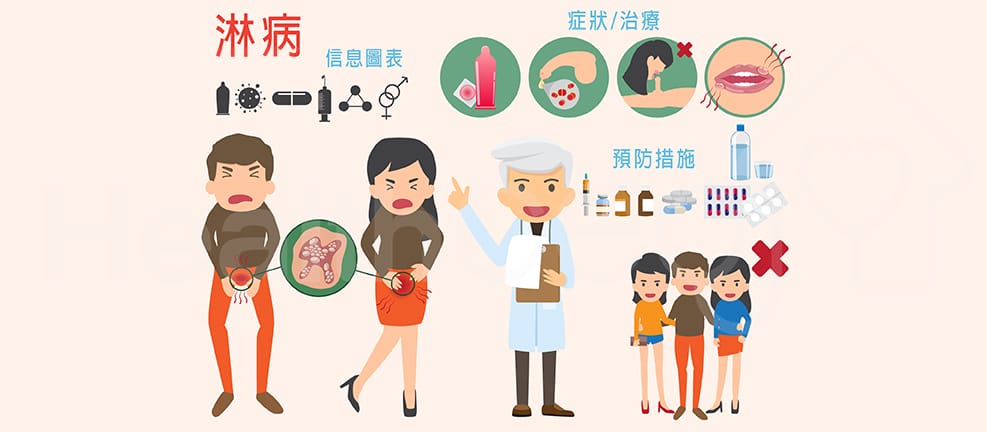
Transmission of Gonorrhea
Introduction: Gonorrhea Transmission in Hong Kong
Gonorrhea is a common sexually transmitted infection (STI) caused by the bacterium Neisseria gonorrhoeae . Understanding exactly how gonorrhea transmits is crucial for prevention, especially in a dense urban environment like Hong Kong. This guide provides detailed information on transmission routes, risk factors, and effective prevention strategies relevant to Hong Kong residents.
How Gonorrhea is Transmitted
Gonorrhea is spread by infected semen and vaginal secretion during unprotected sexual activity, including vaginal sex, anal sex, oral sex and sharing of unwashed sex toys with an infected person. Gonorrhea can also be spread from the infected mother to the baby during childbirth, leading to eye and joint infection of the newborn (REF. Thadepalli H, Rambhatla K, Maidman J, Arce JJ, Davidson EC Jr. Gonococcal sepsis secondary to fetal monitoring. Am J Obstet Gynecol, 126(4), 510–512 (1976).).
Primary Modes of Sexual Transmission
You can get gonorrhea by having vaginal, anal, or oral sex without a condom with someone who has the infection . The transmission routes are:
- Vaginal Intercourse: Direct contact with infected vaginal fluids or semen.
- Anal Intercourse: Leads to rectal gonorrhea, which can be asymptomatic or cause symptoms like discharge, itching, and painful bowel movements .
- Oral Sex: Can result in pharyngeal (throat) gonorrhea, which often shows no symptoms but can sometimes cause a sore throat .
Mother-to-Child Transmission
A pregnant person with gonorrhea can pass the infection to their baby during vaginal childbirth . This can cause serious health problems for the newborn, most commonly a severe eye infection (neonatal conjunctivitis) that can lead to blindness if untreated .
Symptoms That Can Indicate Infection
Recognizing symptoms is key to seeking timely testing and preventing further transmission. However, it is crucial to remember that many infected individuals experience no symptoms at all .
The following table outlines common symptoms based on gender and infection site:
| Infection Site | Symptoms in Men | Symptoms in Women |
|---|---|---|
| Genitals | Burning sensation when urinating; White, yellow, or green discharge from the penis; Painful or swollen testicles (less common) | Painful or burning sensation when peeing; Increased vaginal discharge; Vaginal bleeding between periods |
| Rectum | Discharge, anal itching, soreness, bleeding, or painful bowel movements (in both men and women) | Discharge, anal itching, soreness, bleeding, or painful bowel movements (in both men and women) |
| Throat | Sore throat (often mild or asymptomatic) | Sore throat (often mild or asymptomatic) |
◈ What Does NOT Transmit Gonorrhea
Dispelling myths is a critical part of prevention. Gonorrhea is not spread through casual contact . You cannot get gonorrhea from:
- Kissing, hugging, or shaking hands .
- Sharing food, drinks, or using the same utensils.
- Sitting on toilet seats .
- Swimming in public pools or using hot tubs .
- Contact with objects like doorknobs or clothing.
The bacteria cannot survive for long outside the human body and requires very specific conditions to transmit, which are not met in these everyday scenarios .
◈ Risk Factors in Hong Kong
Any sexually active person can get gonorrhea, but risk is higher for those who :
- Have unprotected sex (without a condom) with new or multiple partners.
- Have a previous history of STIs.
- Are young adults, with a high incidence among those aged 15-24 .
- Are men who have sex with men (MSM) .
Prevention Strategies for Hong Kong Residents
Protecting yourself and your partners is key to controlling the spread of STIs in Hong Kong.
- Use Condoms: Consistently and correctly using male or female condoms during every vaginal, anal, and oral sexual encounter is one of the most effective methods .
- Mutual Monogamy: Being in a long-term, mutually monogamous relationship with a partner who has been tested and is known to be uninfected .
- Regular Testing: Get tested regularly if you are sexually active, especially if you have new or multiple sexual partners. The Department of Health provides resources and services for STI testing .
- Open Communication: Discuss sexual health with your partners and agree on safe sex practices.
- Partner Treatment: If diagnosed, ensure your sexual partner(s) also get tested and treated to prevent reinfection and further spread .
11/F, 168 Queen’s Road Central, Central
(7 min from Central MTR Exit D2 /
2 min from Sheung Wan MTR Exit E2)
Hourly Parking Nearby : The Center, Grand Millennium Plaza
+852 3708 1878
+852 9221 2346 (Text Only)
[email protected]
Mon-Fri : 9:45a.m. – 1:45p.m. ;
3:00p.m. – 6:10p.m.
Sat : 9:45a.m. – 1:15p.m.
Sun and Public Holiday: Close
By Appointment Only